Probably nothing would give more pleasure to a Bengali than having soft and puffed up luchis to go with jhurjhure alur bhaja (potatoes stir-fry) for breakfast. It's a typical breakfast menu in most Bengali households, not only during the busy weekdays but also on the weekends. Sometimes payesh too is included. 

Luchi can be considered as a distant cousin of puris (that are made from unrefined wheat flour or atta) because luchis are prepared from refined flour (maida) and look whitish in colour as compared to the brown-coloured puris. To make luchis, we have to first prepare a semi-soft dough of refined wheat flour or maida mixing it with enough water. We can also add a little amount of curd, that will make the luchis even softer. The dough is then covered with a clean, wet and soft muslin cloth and left for about half an hour. Round balls are then made out of them, flattened and rolled out into puris using a rolling pin, which are then deep fried in vegetable refined oil. Luchis with the alu bhaja might be sounding like a simple fare but they taste heavenly. Give it a try.
Since I hail from the state of West Bengal, probably one would imagine that I will choose a city from Bengal as my most favourite city if I was asked to name mine. Well, had I not been to Delhi ever and had I not stayed here for so long, I would have done just that. Kolkatta was definitely on my mind but then in the end, I followed my heart and yes, I confess my love for "Dilli" - the heart of India. It took me some time to get used to Delhi and its ways but there ws something in it that had caught my attention. I instantly felt connected with the city. I had probably already fallen in love with the city the moment I landed here. It only took me a few years to realise the love. Now I feel more at home here than anywhere else. I had never been outside of Bengal before my marriage and so was taken aback by the fast moving lifestyle in Delhi. Initially I felt very out of place in the city and of course it took me a few years to get adjusted to the ways of the Dilliwallahs. There are still a few things that I dislike about Delhi but the good things outweigh them.

Being the capital city of India, Delhi is literally the heart of India. It has been a thriving city for several centuries. It continues to be one of India's most important cultural, political and commercial centres. It has got a rich cultural history dating back to the times of Mahabharata to almost 3000 years. Delhi used to be known by the name of Indraprastha in those days. As per the epic, Indraprastha or "city of Indra" was built by the Pandava brothers on the banks of the river Yamuna and used to be their capital. Centuries later the Moghuls made the city their seat of power. Delhi has always been culturally diverse and even though several rulers ruled over the city - from the Mauryas to the Moghuls to the Britishers, but the city managed to retain the essence of each bygone era. The city is dotted with several monuments from the Moghul era but in the vicinity, you will also find modern infrastructure with world class amenities, befitting the image of a capital city.

It's said the current city Delhi was built and re-built many times (some say five times) by its rulers. Then again in 1911 when King George visited India, the British empire made Delhi as its capital. During his tenure, the city underwent several changes and saw significant infrastructural development - important buildings like parliament and public offices were built. New Delhi was designed by British architects Edwin Lutyens and Herbert Baker and was inaugurated in 1931 by Lord Irwin, the then Viceroy of India. Even to this day, the city continues to witness massive expansion, modernisation and redevelopment activities.

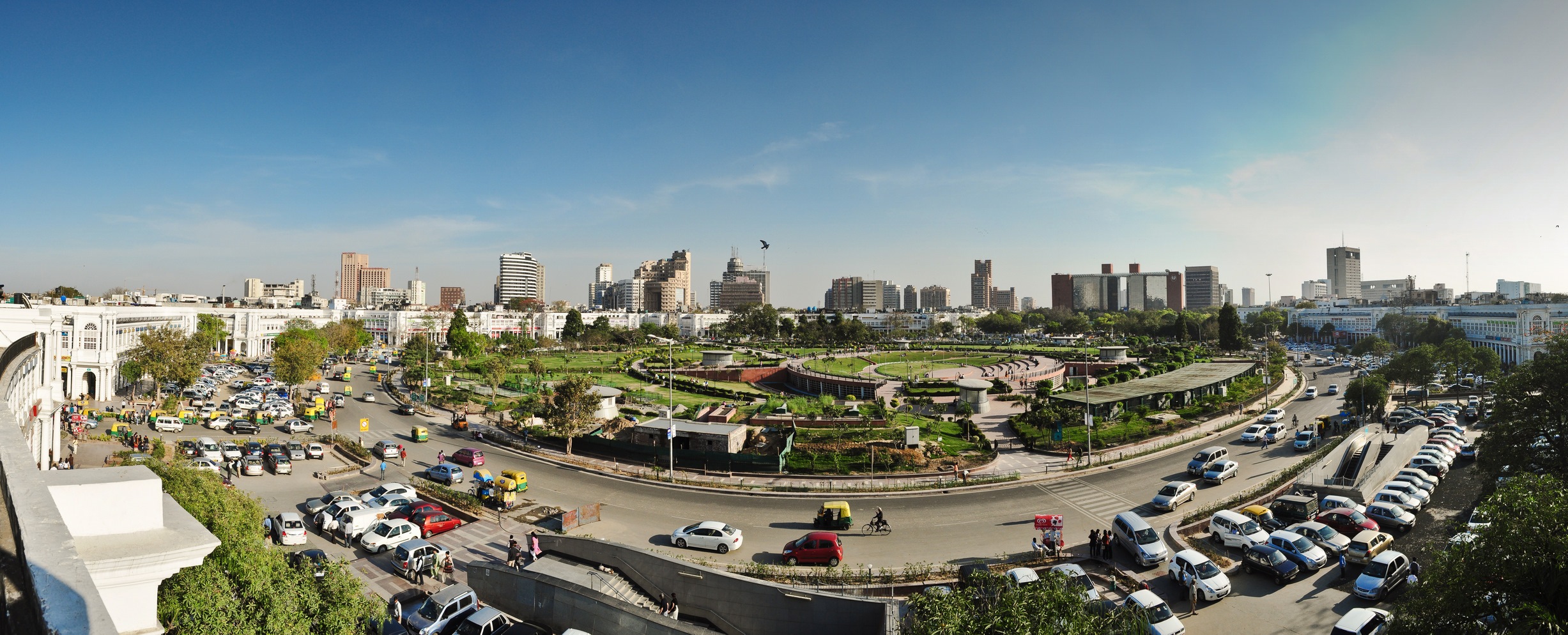
(Photo sourced from https://upload.wikimedia.org/wikipedia/commons/4/49/Skyline_at_Rajiv_Chowk.JPG)

Teeming with a population of about 25 million, it is the second most populated city in India. It is situated on the banks of Yamuna and is surrounded by the states of Punjab, Haryana and Uttar Pradesh. The city is the biggest and the most important commercial centre in North India and so almost every day, a huge number of people come from the bordering states to the capital looking for work. Be it educational and medical facilities or be it career opportunities, Delhi is indeed "the land of immense possibilities". They say that no one fails to get work and earn livelihood in the city.

(Photo sourced from http://www.naturalhighsafaris.com/cdn/cache/made/cdn/uploads/country_images/India/North/Delhi/India-Gate--Delhi-Photos2_940_529_80_s_c1.jpg )
Delhi is thoroughly connected to all parts of the country, be it by air or by road or by the Indian railway. The city has both domestic airports (two) and an International one - Indira Gandhi International Airport, which is said to be one of the busiest airports in Asia.Apart from the Indian railway network, Delhi also has a suburban railway system by which people from the city as well as from the neighbouring states travel to and from the city. It has five National Highways running through it - NH1, NH2, NH8, NH10 and NH24. DTC buses, autos and taxis and so also private RTB buses ply inside the city, thus connecting all parts of the city. Since 2002, the Delhi Metro has been the lifeline of Delhi. It has become one of the primary means of transportation in Delhi today and connects the cities to the neighbouring cities as well like Gurgaon, Noida and Ghaziabad.

P.S. : Written for Tata Motors' Made of Great Zonal wars. You can also go to their website http://madeofgreat.tatamotors.com/ and know more about it.


It has been close to seven years now since I moved to Delhi from Siliguri after my marriage and though it took me some time to get adjusted to the new environment but I can now proudly say that I have pretty much succeeded in absorbing the way of living of the Delhiites.

To speak the truth, I was reluctant at first to leave my home state. I was actually pretty nervous, being apprehensive about whether I would be able to adjust at the new place. I had never moved out of my home state. We came over to Delhi only after a week of our marriage because my husband had to rejoin his duty. I was 23 then, I was young, naive and totally inexperienced. Not only was I going to stay miles away from my parents and in-laws, but also the fact that I had the added responsibility of setting up my new home at an absolutely new place and environment, was scaring me. I fumbled and made several mistakes. After my husband would leave for his office, I used to feel very lonely at home. I would miss my family very much and at times, felt miserable and helpless when I failed at something. That's when I found an extremely caring and a lovable mentor in Poonam aunty, our next-door neighbour. She came like a Godsend to me. She has always been there for me, like a mother would do. She would help me with advices and tips whenever I needed them. But the best thing of all is that, in all these years, she has benefitted me immensely by teaching me some quintessential Punjabi recipes - be it how to make kulcha or amritsari naan, or be it cholle and rajma; be it makki ki roti and sarson ka saag or desserts like gajar ka halwa and various barfis. Out of them all however, one sweet dish has always remained my favourite Punjabi dessert - Phirni. That was the first sweet dish that she had taught me and coincidentally phirni is her favourite as well. It's a very popular sweet dish in North India and is usually prepared during the festive occasions, especially during Karwa Chauth.

The other day while we were having our usual evening chat, somehow a passing mention of Phirni came up and that's when she told that she hasn't eaten it ever since she was diagnosed with diabetes a couple of months back. I was saddened to know that. But just then an idea struck me. I thought I could still make Phirni for poonam aunty by substituting sugar with Sugar free natura, which is an absolutely safe alternative to table sugar, even for the diabetes patients. It has no harmful effects and gives us the same sweetness as the normally available sugar but with negligible calories. It contains Sucralose and since it is highly heat stable, so it can be used for cooking and baking purposes without a worry. I wanted to surprise Poonam aunty by cooking phirni for her using Sugar Free Natura.


The recipe is quite simple and anyone can prepare it at home.

Ingredients:

Whole Milk, 1 Litre
Basmati rice 1/4 cup
Sugar free Natura, 1/2 cup
Saffron, 10-12 strands to soak in milk
Green Cardamoms, 3-4, crushed
Dry Nuts (Almonds, cashew nuts), 8-10 each

Method:

Taking 1/4th cup of basmati rice, first wash it thoroughly to clean it of all impurities and after draining out all water, spread the rice over a dry, clean muslin cloth or paper so that the rice dries up quickly.

After the rice grains have dried up, grind them into a somewhat coarse powder, it shouldn't be an absolutely fine powder, it should rather be a litle grainy, resembling semolina or suji. Now keep that aside.

Take the milk in a non-stick pan and bring it to boil, stirring it continuously, over medium heat. That should take about seven to eight mnutes.

But before the milk has boiled, take out about 2 tablespoons of warm milk in a small bowl and adding the saffron strands, mash them a bit and leave it to soak in the milk, so that the saffron starts to soften up and imparts its colour to the milk. After a good 3-4 minutes, the colour of the solution would have changed to light yellow. Keep that aside.

In the mean time, in another small bowl, take some warm water and add the almonds into it and leave them soaked for 4-5 minutes. Doing that will make it easy to peel off the skin of the almonds. They can then be sliced thinly and kept aside and shall be used later for garnishing.

When the milk in the sauce pan starts boiling, lower the flame and add the powdered rice into it and keep stirring slowly.


We have to be careful that no limps get formed in the milk and rice mixture and so we have to keep stirring at regular intervals.

When the milk gets reduced considerably and the rice is almost cooked (that should take about 20-25 minutes of cooking over low-medium heat)and we see another boil, stir in the Sugar free natura. So also add the saffron and milk solution.


Then add the chopped dry fruits (almonds and cashew nuts) and also add the crushed cardamoms.


Cook the phirni over low heat for another 2-3 minutes and then turn off the heat and let it to cool down to the room temperature.

We can also keep it inside the refrigerator for about 15-20 minutes and before serving, we can garnish it with some more chopped dry nuts.


I made this Phirni day before yesterday and it tasted absolutely heavenly, even my husband who isn't that much of a sweet lover, was all praise for me. The best part was that no table sugar was used, instead it had been substituted with sugar free natura (and so was healthy) but even with no sugar used, one wouldn't have been able to notice the difference - it had the same taste and sweetness of normal sugar.

One should have seen the excitement on Poonam aunty's face when I called her over and told her that I had a surprise for her. She was over-joyed and was mighty surprised, when I served her Phirni and told her that it could safely eaten because it was sugar free (sugar free natura had been used and not the normal sugar). The moment she took a spoonful of Phirni into her mouth, she got up from her cahir excitedly and hugged me as if I had returned her a priceless thing. I had never seen her that happy before. My efforts were fruitful and I felt extremely satisfied, all thanks to Sugar free natura.

Sugar free natura

Traditionally prawns are cooked with the cream of a fresh, tender coconut and other spices and is more famously known as Chingri Macher Malaikari. It is one of the most popular dishes among the Bengalis and everyone in my family too love it. But here in Delhi, we aren't able to cook them as often since we fail to procure fresh prawns in Delhi. However my father-in-law told me this evening that he was yearning to eat prawns. So his son at once set out looking for prawns and luckily he could find the bigger sized prawns. So I made Chingri Macher Malaikari for dinner tonight.

Ingredients :

Prawns (big-sized) - about 500 gms
Boiled potatoes, diced
Onion paste - 1 tbsp
Ginger-garlic paste - 1 tbsp
Green chillies - 3-4 slit along their length
Tomatoes - 2 small sized, finely chopped
Turmeric powder - 1/2 tsp
Garam masala powder - 1/2 tsp
Red chili powder - 1/2 tsp
Bay leaf - 1
Cinnamon stick - 1
Cloves - 4-5
Green cardamom - 4
Coconut milk - 1 cup
Ghee - 1 tbsp
Salt
Mustard oil - about 4 tbsp
Fresh coriander leaves (for garnishing)

Method :

After cleaning the prawn pieces, marinate them with turmeric powder and a small amount of salt and keep them aside.
Now heat mustard oil in a wok and fry the prawns till they turn slightly brown in colour. Take them out and keep them aside on a plate. To the same oil, now add the dry spices - bay leaf, cinnamon, green cardamom and so also the green chillies and saute them for a few seconds till their aroma starts coming. Then add the onion paste and also the ginger-garlic paste and saute over medium heat for about 5 minutes till their raw smell goes away. Add the chopped tomatoes now and again fry them till they become soft ad mushy. Add turmeric powder, chili powder, salt and garam masala powder, and also add the coconut milk along with some water and stir in some ghee as well. Mix nicely and let the gravy to boil. Now is the time to add the fried prawns and the boiled potato cubes to the gravy. Cook for some 10 minutes or so or until you get the desired consistency of the gravy. Garnish it with chopped coriander leaves and serve it with steamed rice.

Like I had written in my previous egg curry post, I have always loved eggs. Dimer Jhol has been one of my favourite dishes right my graduation days at Hyderabad and even when I wish for a change, I would ionstead make omellete curry instead of the regular fare. Omellette curry is quite easy to make and goes very well with both boiled rice or with chapatis. I remember, after marriage, when I came over to Delhi with my husband, the first thing I made in our new rented flat was this omellette curry. My husband had never eaten this curry before, so had never imagined that one could even make a curry out of omellete pieces! He had actually laughed at me when I told him what I was preparing for dinner that night. But then when he tasted the curry, he went gaga about it. So whenever I run out of options or I am in a hurry or whenever I feel very hungry but wouldn't have the time or patience to cook a full meal, I go for this omellette curry.

Ingredients :

Eggs - 4
Potato - 2 medium sized
Onion paste - 3 tbsp
Ginger-garlic paste - 1 tbsp
Tomato - 1 large sized, chopped finely
Boiled white peas - about 100 gms
Chili powder - 1 tsp
Coriander powder - 1/2 tsp
Garam masala powder - 1/2 tsp
Cloves - 2
Cinnamon - 1” piece
Black cardamom - 1
Turmeric powder - 1/2 tsp
Salt as per taste
Mustard Oil - about 5-6 tbsp
chopped coriander leaves for garnishing

Method :

Wash the pototoes thoroughly and put them into a pressure cooker to boil for two whistles. Then cut them into cubes and keep them aside.
Now in a bowl, break the eggs, add to them chopped onions, chopped green chillies, salt, crushed black peppercorns and some chopped coriander leaves and whisk the mixture to a smooth paste.
Now heating about 2 tbsp of oil in a flat bottomed pan, pour the omellette mixture and spread it nicely to make a thick but soft omellette. Cook it for about 2 minutes and when done, flip it to the other side and once again let it to cook for 2 minutes. Now take it out onto a plate and let it to cool for a few minutes. Similarly, you can make another omellette too, if you wish to have a greated amount of omellete curry. After that, cut the omellette into square pieces and keep them aside.

Now again taking the rest of the cooking in a wok, let it to become hot and then add the whole spices (slightly crushed so that their aroma comes out). Once they start to splutter, add the onion paste and saute on medium flame for a few minutes till they turn golden brown. Add the ginger garlic paste and cook for another 2-3 minutes. Now add coriander powder, chili powder and turmeric powder, also add the chopped tomatoes and little salt and cook till they become all mushy. Keep stirring every now and then so that the gravy doesn't get burnt. Now add the omellete pieces and the boiled potatoes, mix them nicely with the gravy and then pour in about 2 cups of water and let the curry to cook on simmer flame, after covering it with a lid. When it's done, you can garnish the omellete curry with chopped coriander leaves or garam masala powder and serve it hot with steamed rice or chapatis. Normally I prefer to have it with steamed rice. 


Childhood memories are hard to forget. Often I find myself filled with nostalgic thoughts from my growing up years back in Siliguri. Among other things, food memories are the ones that often come to me, hehe.Like it happened this morning when I remembered Roghu Kaku's luchi and alur dum that he used to sell outside our school premises on his bicycle. He used to be very popular for his alur dum around the area, especially we kids used to love his fare a lot. I remember how we used to wait anxiously for the bell to ring for the recess time, so that we could run to our school gate. He would be waiting already outside our school gate during the lunch hours. Those days used to fun. So this morning I decided to make kosha alur dum for breakfast to go with the luchis. I wasn't sure if I could replicate the same taste as that of Roghu kaku's alur dum but I tried and it came quite close to it. May be, the next time when I make alur dum, I will be able to make it taste exactly like Roghu Kaku's used to be.

Ingredients :

Potatoes -5 medium sized (boiled and peeled. Baby potatoes may be used too. We can poke holes in them with a fork to let the steam get into them nicely).
Onion - 1 (finely chopped or can be made into a paste)
Garlic paste - 1/2 tbsp
Ginger paste - 1 tsp
Bay leaf - 1
Green chilies - 2-3 chopped
Turmeric powder - ½ tsp
Garam masala powder - 1/4 tsp
Cumin seeds - ½ tsp
Salt, as per taste
Sugar - 1 tsp
Lemon juice, 1 tbsp (it is optional)
Mustard oil - 4 to 5 tbsp
Fresh coriander leaves - 2 tsp (finely chopped)

Method :

Heat the mustard oil in a deep bottomed pan and temper with bay leaf  and the cumin seeds. Once they begin to splutter, add the grated onion and saute them till they turn golden brown in color. Then add the ginger paste, garlic paste and the green chilies, saute them for a minute or two. Now add alur dum masala (equal amount of cumin seeds, coriander seeds, broken dry red chillies and black peppercorns dry roasted and then powdered) and salt and mix them all nicely. Fry this masala gravy on medium heat till it starts to leave oil from the sides. Now add the boiled potatoes, mix nicely with the masala and saute for 4-5 minutes on medium heat. Then adding a cup of water, stir nicely and let them to cook uncovered on low flame till there come no raw smell of the masala. The gravy should be thicker, so keep stirring every now and then to prevent it from getting stuck to the bottom of the pan. Now add sugar, lemon juice and garam masala powder, mix nicely and cook for another minute or so, then remove it from the fire. Garnish the alur dum with the chopped coriander leaves. It is now ready to be served with luchi, or porotha or even with steamed rice. I ate them with luchis, though not exactly like that of Roghu Kaku's luchi-alur dum, but they tasted very good.


Today being a Sunday, my family members were wishing to have something of a non-veg dish for lunch and were wishing for Ilish mach. Though it's not easy to find Ilish mach in Delhi but somehow my husband managed to find from the Chittoronjon park. We Bengalis prepare Ilish mach in quite a few different methos, sometimes it's cooked with curd (doi mach) and sometimes it is cooked with begun (brinjals) and sometimes it is cooked with only potatoes. Today I thought about preparing it with mustard paste, without using any onions or garlic or ginger. Everyone loved the taste.

Ingredients :

Ilish Mach (Hilsa fish) - 6-7 pieces (about 500 gms)
Potatoes - 2-3 medium sized, boiled, peeled and cut into long pieces
Tomato puree - 3 tbsp
Black Mustard Seeds - 2 tbsp (Soak them in lukewarm water)
Kalojeere or Kalonji or Nigella seeds - 2 tbsp
Turmeric powder - 1 tsp
Red Chilli Powder - 1 tsp
Salt as per taste
Green Chillies - (slited along the length) 8-10 nos.
Mustard Oil - 4 tbsp

Method :

After washing clean the fish pieces and wiping them dry, place them in a bowl and add 1/2 tsp of turmeric powder and some salt to it and mix nicely so that the turmeric powder and salt get coated all over the fish pieces. Let them to marinate. Then prepare a semi-smooth paste of the soaked mustard seeds along with 2 green chillies and a pinch of salt and keep it aside. Heat mustard oil in a wok and fry the Ilish mach pieces to a golden brown colour. Take them out when they turn crisp. Now temper the same oil with nigella seeds and the slited green chillies and add tomato puree too. Cook stirring every now and then till the raw smell of the tomatoes goes away. Add the prepared mustard paste, turmeric powder, red chilli powder and some water to the mixture and bring it to boil over medium flame. Now slowly add the fried fish pieces and the boiled potato pieces as well into the mustard gravy and covering the wok with a lid, let them to cook over low flame for about 15-20 minutes so that the flavour of the mustard paste goes into the fish. When the gravy reaches the desired consistency, remove it from the fire. Sorshe bata diye Ilish jhol is ready to be eaten. It goes very well with steamed rice.